Main purpose
Heat pipe heat exchangers have been widely used in industries such as metallurgy, chemical engineering, refining, boilers, ceramics, transportation, textiles, and machinery. As energy-saving equipment for waste heat recovery and thermal energy utilization in the process, they have achieved significant economic benefits.
Structure and characteristics
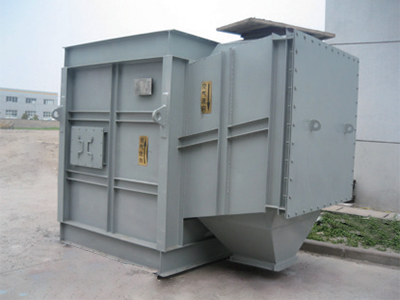
Heat pipe heat exchangers belong to surface heat exchangers where hot and cold fluids do not come into contact with each other. The characteristics of heat pipe heat exchangers are simple structure, high heat transfer efficiency, and lower metal consumption compared to other types of heat exchangers under the same heat transfer conditions. The pressure loss of the heat exchange fluid passing through the heat exchanger is smaller than that of other heat exchangers, resulting in lower power consumption. Due to the fact that the cold and hot fluids exchange heat through different parts of the heat pipe heat exchanger, and the heat pipe components are independent of each other, even if a certain heat pipe fails or punctures, it will not have much impact on the isolation and heat transfer between the cold and hot fluids. In addition, heat pipe heat exchangers can easily adjust the heat exchange area ratio between the cold and hot sides, thereby effectively avoiding dew point corrosion of corrosive gases. The characteristics of heat pipe heat exchangers are receiving increasing attention and their applications are becoming more widespread.
According to the states of hot and cold fluids, heat pipe heat exchangers can be divided into gas gas, gas vapor, gas-liquid, liquid-liquid, and liquid gas types. From the structural form of heat pipe heat exchangers, they can be divided into integral, separated, and combined types.
 since 2004




 +86-13906172147
